


For as long as I can remember, I’ve lived in my head. When a feeling comes up, I immediately try to rationalize my way out: Why is this happening? What’s wrong? How can I make it go away?
And now I have a partner in my over-rationalization: Mr. GPT. BFF Claude, my boo Gemini...
Last month, I started my Tuesday AM therapy session with what I’m sure my therapist, and therapists everywhere, are hearing way too often these days: “So ChatGPT told me...”
I’ve asked ChatGPT and Claude thousands of questions about myself by now.
This is the specific prompt I used and discussed with my therapist. It did help me see patterns I didn’t notice before. It told me I turn every “weekend side project” into a “weekend optionality playground.” That I have taste, intelligence, and range (why thank you, sir GPT…), but I’m missing “a container that forces depth.”
The insights felt like progress, like I was finally doing the work. Then my therapist said something I knew, but needed to hear: “ChatGPT doesn’t have a body.”
Hmmmmm. All those thousands of questions? I was just getting really, really good at skipping over myself and going straight to the analysis, living in my head, with my non-body friends.
the body first
The answers don’t always start with AI, especially when you’re trying to better connect with and understand yourself. They start with you. With our bodies.
With that sensation in your chest, before you can name it. With the way your shoulders tense when you think about that Slack (you know, THAT “hi” Slack message with no context…). With the relief you feel when you finally sit down on the couch…with your cats…about to turn on Members Only: Palm Beach (it’s so bad, don’t watch) after a long day. That’s where the real insight lives (before you also turn on trash TV).
But somewhere along the way, I started skipping that step entirely. Feeling anxious? Jump to ChatGPT to analyze why. Feeling stuck? Ask Claude for a framework. Feeling overwhelmed? Get Gemini to organize my thoughts into a neat bulleted list.
I was outsourcing the very first step, the huge one that really matters. As my therapist also pointed out: “ChatGPT never asks you: how does it feel?” It can’t. It only sees the part of you that shows up as text and logic. It has no access to your physical sensations, your emotions, the way your nervous system is responding right now to what you’re experiencing. Yes, you can explain it, but it doesn’t feel what you are feeling.
Some of my favorite ideas haven’t come from prompting smarter. They come in the shower, where there’s no screen and no agenda (except in my parents’ where my mom continues her podcasts with a waterproof phone holder…another post for another time).
They come on long runs, during morning coffees, in the quiet moments of meditation and journaling. There’s something pretty magical about stepping away from the noise and just... being in your body.

what happens when you skip your body
After thousands of AI conversations, I can tell you what happens when I make it my first stop: it’s pretty addictive. The validation, the patterns, the insights - they feel so productive, like I’m really getting somewhere. But sometimes I find myself going in circles when I could have just paused and felt instead.
And when I’m stressed? When my rational mind is already overloaded, and my nervous system is screaming at me to slow down? Jumping straight to AI makes it worse for me.
When you’re in fight-or-flight mode, your prefrontal cortex is already offline. Your body is trying to tell you something urgent, something important. And instead of listening to it, you’re asking an AI to help you think through it, to rationalize it, to make sense of it with frameworks and analyses. You’re feeding the spiral instead of breaking it.
My therapist explained it when he reminded me later in the session: “Life isn’t black and white. It could be all of those things.” LLMs give you these clean, structured analyses. But your actual inner experience? It’s messy and layered and contradictory and deeply, beautifully human. It lives in your body, not in a prompt response.
It lives in your body, not in a prompt response.
Courtney Collins, a licensed clinical professional counselor at Wildflower Center for Emotional Health, explains that therapy isn’t just about the words a client speaks. It’s about “subtle shifts in body language, tone of voice, and overall presence” - the things that create actual understanding.”
This is the wisdom that gets lost when you skip straight to AI.
what creatives know about starting with your body
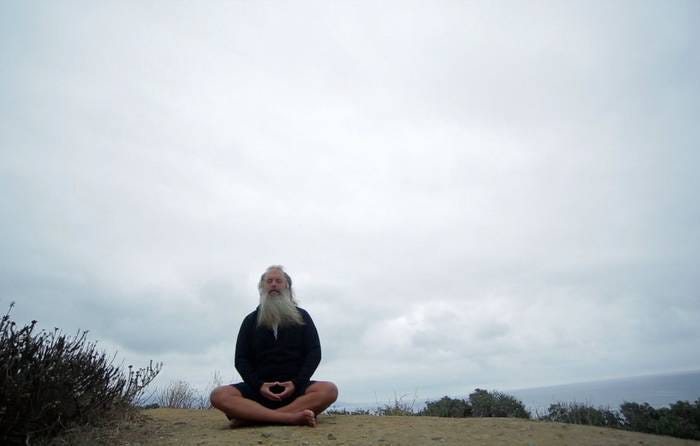
Rick Rubin, Julia Cameron, Michael Singer - the authors, creatives, and spiritual guides I love - they’ve all been saying the same thing: start with your body. Start with what you already know, even if you can’t explain it yet.
Rick Rubin puts it this way in “The Creative Act: A Way of Being”: “We are all antennae for creative thought... If your antenna isn’t sensitively tuned, you’re likely to lose the data in the noise.” Your body is that antenna, picking up signals from your subconscious, from the universe, from whatever source of wisdom you believe in. If your first move is to jump to AI, you miss the signal entirely. You’re asking the wrong antenna.
Julia Cameron writes in “The Right to Write” that “writing is a powerful form of prayer and meditation, connecting us both to our own insights and to a higher and deeper level of inner guidance.” The knowing comes first, in your body and then out through writing, connecting to your inner creative.
Michael Singer explains in “The Untethered Soul”: “You are not the voice of the mind - you are the one who hears it.” You are the one who feels. The one who knows before you know why. That’s not in your head, and it’s definitely not in ChatGPT. That’s in your body, connected to something larger.
ai comes after, not before
I do love using AI, tracking the innovation happening every day, and building in Claude Code as much as I can (and yes, I do spend hours on an AI + Marketing newsletter too…!).
But I'm realizing more and more that it can’t be the starting point for my writing, my ideas, or understanding how I'm feeling - being aware and figuring out what I need.
When I’m feeling stuck or anxious or confused about something, I am now trying to pause. I move from my head down into my body. I notice what’s actually happening - not what I think about what’s happening, but what I feel about it. The sensation and the knowing that’s there even before words.
I try to sit with that for a minute. Sometimes the answer becomes clear just by paying attention to what my body has been trying to tell me. Sometimes I write after to connect even deeper to my body, my intuition, and needs.
And then, if it’s helpful, I might bring in AI. I might use it to help me organize thoughts that are still jumbled. To explore patterns I’m noticing but can’t quite name yet. To map out options I’m considering.
I’m not perfect at this. I still catch myself opening ChatGPT at 2 a.m., asking why I can’t sleep. But the awareness is there now, and that's where I'm starting.
resources i <3
Body Scan Meditations:
Insight Timer App (free guided meditations)
Books/Videos:
“The Creative Act: A Way of Being” by Rick Rubin
“The Right to Write” by Julia Cameron
“The Untethered Soul” by Michael A. Singer
“The Universe Has Your Back” Gabby Bernstein
“The Wisdom of Your Body” by Hillary L. McBride
“How to Do Nothing: Resisting the Attention Economy” by Jenny Odell
A 2-Minute Stress Hack For Burnout | Jane Johnsen | TEDxGramercy Park
Prompts (after you check in with your body):
From Alyssa Petersel:
“Help me identify the difference between what I think I should want and what I actually want…”
From Hamna Aslam Khan:
A comprehensive analysis of your patterns and blind spots
From Esther Jacobs - "10 Surprising ChatGPT Prompts for Self-Discovery and Personal Growth":
A blog dedicated to prompts that go beyond the usual surface-level questions and help uncover blind spots, decision frameworks, and deeper insights about yourself using AI.
From LearnPrompt.org - “11 Powerful ChatGPT Prompts for Self-Discovery”:
A structured, phased approach to using AI as a reflective partner, including core self-awareness, values exploration, strengths/weaknesses analysis, and fear deconstruction.
After you use these prompts, do you feel more grounded in your body or more stuck in your head?
Thanks for reading!
As someone who also lives a lot in my head... yes to all of this! One of my big struggles is with ending my chats with AI. When every response ends with a potential revelation -- next would you like me to explore why you can't decide between spaghetti or lasagna, or give you the history of tomato sauce? -- it's so easy to get caught up in another mindspin.