

what you need to know this week in ai + marketing in 15 seconds:
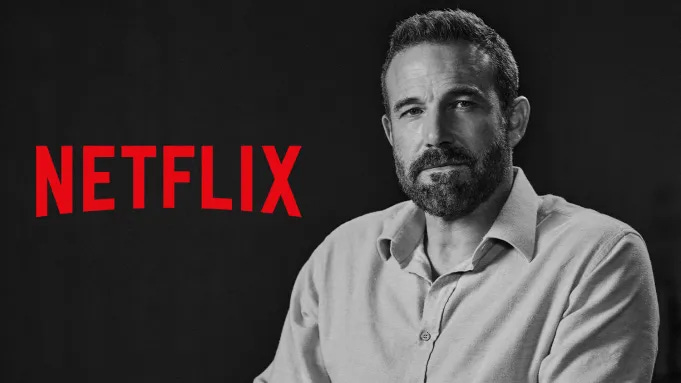
Netflix acquires InterPositive with “AI for storytellers, not replacements” framing - deliberate positioning as creative tool, not substitute. (Netflix)
Anthropic research shows AI job pressure through slower hiring, not mass layoffs - effect showing up more in hiring slowdowns, especially for younger workers in AI-exposed roles (Anthropic)
OpenAI dropped plan for direct checkout inside ChatGPT - users browse and compare in ChatGPT, but prefer to buy on retailer sites where payment info already lives. Trust still sits elsewhere (The Keyword)
AI could disrupt retail media’s $38B search ad market - if shoppers start in ChatGPT instead of retailer search bars, ad dollars may move too (Digiday)
41% say opinion of brand improved when adjacent content was clearly labeled as AI-generated - hidden AI is the problem, labeled AI is just another production choice (Adweek)
OpenAI GPT-5.4 launched - first general-purpose model to autonomously operate across software applications. Also comes in Thinking and Pro variants (OpenAI)
Supreme Court declines AI copyright case - left intact human-authorship standard, leaving the mess for everyone else to keep living in (Reuters)
🗞️ top ai + marketing news
work, jobs, and who actually benefits
Why InterPositive Is Joining Netflix
Netflix | ~3-min read
Netflix says the InterPositive team is joining because both sides see AI as something that should help storytellers do better work, not replace them. The framing is very deliberate: creative tool, not creative substitute.
My take: Everyone in entertainment knows the fear. So when a company says “this is for filmmakers,” that wording is doing a lot of work. But I don’t really believe it (sorry, founder Ben Affleck).
Labor Market Impacts: A New Measure and Early Evidence
Anthropic | ~6-min read
Anthropic’s latest labor market work points to early job pressure in AI-exposed roles, especially for younger workers, and suggests the effect is showing up more through slower hiring than mass separations. It is one of the clearer attempts to measure labor impact with something firmer than vibes.
My take: The hiring slowdown point matters. That kind of change is easier to miss and much harder to explain away.
Research: How AI Is Changing the Labor Market
Harvard Business Review | ~6-min read
HBR frames the labor shift through job posting data and asks a more grounded question than most coverage does: where is demand actually changing, and for whom? That is a better question than “will AI take jobs,” which is usually how these conversations get flattened.
My take: The labor market story is rarely one dramatic cliff. It is usually slower and patchier.
the operating model problem
How Marketers Use AI to Test Creative Ideas, Generate Insights
Business Insider | ~8-min read
Business Insider talked to rising brand marketers using tools like Midjourney and Copilot to pressure-test concepts, build presentation visuals, and strip out low-value busywork so they have more time for the actual strategy.
My take: This feels like the healthiest version of AI use in marketing: less “replace the team,” more “give the team their afternoon back.”
Automation Is Marketing’s Fastest Path to AI Returns
MarTech | ~5-min read
Gartner’s point here is simple: automation levels correlate with AI returns, and if the workflow never changes, the AI budget just lands on top of old inefficiencies. The article is less about shiny tools and more about structural cleanup.
My take: This is the unsexy answer nobody wants, which usually means it is the right one.
Why Most Marketers Are Still Only Experimenting With AI
MarTech | ~4-min read
Most teams are still using AI for the easiest operational tasks, mostly around efficiency and repetitive work. Useful, yes. Transformational, not really. The bigger blocker is not tool access so much as strategy, training, and data maturity.
My take: A lot of “AI adoption” still looks like speed-ups around the edges.
CMOs Face Risks Locking Brands Into Agency AI Platforms: Gartner
Marketing Dive | ~4-min read
Gartner’s warning is that agency-owned AI platforms could create lock-in risk, and many of those tools may be obsolete within a few years anyway. The article pushes brands to remember that human talent ages better than proprietary dashboards.
My take: Renting someone else’s “AI moat” is still renting.
Breaking Down Agentic AI in Marketing
Marketing Brew | ~5-min read
This piece gets into the “better safe than sorry” side of agentic AI in marketing, including what happens when systems are given too much autonomy without enough oversight. The security angle is hard to ignore.
My take: Every team loves the idea of an agent right up until it does something weird in public…
search, commerce, and where the money moves
OpenAI Drops Plan for Direct Checkout Inside ChatGPT
The Keyword | ~6-min read
OpenAI backed away from direct checkout because users were browsing and comparing inside ChatGPT, but still preferred to buy on retailer sites where their payment info and accounts already lived. That says a lot about where trust still sits in commerce.
My take: People are fine asking ChatGPT what to buy. They are not as eager to hand it their credit card.
How AI Could Disrupt Retail Media’s $38 Billion Search Ad Market
Digiday | ~5-min read
If shoppers start in ChatGPT or other AI interfaces instead of retailer search bars, retail media’s sponsored search economics get shakier. Digiday basically lays out the threat in plain terms: if the query moves, the ad dollars may move too.
My take: This is one of those stories that sounds niche until you remember how much money sits inside retailer search.
How to Turn Claude Code Into Your SEO Command Center
Search Engine Land | ~5-min read
A practical piece on using Claude Code for SEO workflows, including working with Google Ads and search term data even when API access is messy or incomplete. It is more useful than theoretical, which is refreshing.
My take: The most convincing AI stories right now are still the boring ones where someone saves six hours and moves on with their day.
Why AI Visibility Can Increase Direct Traffic Even When Nobody Clicks
MarTech | ~4-min read
This one argues that showing up in AI answers can still drive brand recall and later visits, even if the AI result itself gets the interaction. It is a useful reminder that “no click” does not automatically mean “no effect.”
My take: This is why brand and search are collapsing back into the same conversation.
trust, content, and the AI label problem
Brands May Actually Benefit From Advertising Next to AI Content, Per Study
Adweek | ~4-min read
The key detail here is disclosure. In the study, 41% of respondents said their opinion of a brand improved when the adjacent content was clearly labeled as AI-generated. That is not a blanket endorsement of AI content. It is a vote for transparency.
My take: Hidden AI is the problem. Labeled AI is just another production choice.
A Practical Framework for AI Disclosure in Marketing
MarTech | ~5-min read
A useful framework for when disclosure matters, how explicit it should be, and how to avoid turning it into either a legal wall of text or a trust problem.
My take: This is the kind of policy work that sounds dull and then quietly saves a brand six months later.
Can AI Replace Humans for Market Research?
The Wall Street Journal | ~4-min read
AI agents are now being used to simulate and predict human behavior for market research, with startups pitching this as a faster and cheaper route to customer insight. The pitch is speed. The question is how much of the nuance survives the shortcut.
My take: Synthetic respondents are interesting. I still would not trust them to tell me why a person changed their mind.
prompts, practical tools, and everyday use
AI Prompt Library
Sprout Social | ~5-min read
A prompt library built for social media workflows, with examples for drafting, ideation, and analytics support. The useful part is not the existence of prompts. It is the reminder that prompt quality still depends on human clarity and context.
My take: Prompt libraries are helpful!!
rules, rights, and courts catching up slowly
U.S. Supreme Court Declines to Hear Dispute Over Copyrights for AI-Generated Material
Reuters | ~3-min read
The Supreme Court declined to take up the question of whether purely AI-generated artwork can be copyrighted, leaving intact the current human-authorship standard after a case involving computer scientist Stephen Thaler and his system DABUS.
My take: The court did what courts often do with new technology. It left the mess for everyone else to keep living in.
Block, Jack Dorsey, and the ‘AI-Washing’ Layoffs Debate
The New York Times | ~5-min read
This opinion piece picks up the growing discomfort around companies using AI language to frame layoffs that may have more to do with cost-cutting than actual technical displacement.
My take: People can usually tell when AI is the cause and when it is just the press release.
👩💻 thought-leader highlights
Rachel Roundy – “AI Won’t Replace Human Creativity” (LinkedIn)
Rachel argues that AI excels at left‑brain tasks such as coding and forecasting but will never match the right‑brain skills of judgement, complex reasoning, and emotional intuition. She tells writers and artists to lean into their curiosity and unique view of the world, because what distinguishes you — your taste, human connection, and ability to ask the right questions — can’t be replicated by a model.
Livia Han – “Marketing Shifts with Elaine Zelby: AI, Automation, and the Future of Marketing” (LinkedIn)
In a chat with Elaine Zelby, Livia outlines how marketers must adapt as AI automates more work: clarify what uniquely human marketers add, adopt new tools today, decide whether we’re in a bundling or unbundling era of SaaS, and learn to split focus across strategic, operational, and creative buckets.
Mallory Contois – “Rage Against the Machine” (Substack)
Mallory’s newsletter contends that the bigger threat than AI is our collective complacency: as more knowledge work is automated, the people who show their process, effort, vulnerability, and personality will differentiate themselves. Mallory urges creators to treat AI like a calculator — use it to accelerate output, but never outsource judgment or strategic thinking.
Emily Kramer – “What real marketers are building with Claude Code” (Substack)
Emily continues her exploration of marketing agents by sharing five builds: her own positioning checker and marketing‑advantages skills; Elaine Zelby’s outbound agent that links Cowork to HubSpot, Clay, Slack, and email; Aditya Vempaty’s humanizer skill for reviewing AI‑generated copy; and Kamil Rextin’s LinkedIn ad‑intelligence agent. She also offers a primer on when to use Claude Chat, Cowork, or Code and invites readers to download the skills or join an upcoming hackathon.
Brandon Redlinger – “Claude App Variants: Chat, Code, Cowork Differences” (LinkedIn)
Brandon explains that since Claude topped the App Store, newcomers should pick the right mode: Claude Chat is for quick brainstorming and writing; Claude Code is a developer‑style tool for automating across files, version controlling outputs, and manipulating data; and Claude Cowork offers many of Code’s capabilities but without the terminal, ideal for deeper workflows and file creation.
Mollie Amkraut Mueller – “Building a directory for women in AI”
A few weeks ago, Mollie asked LinkedIn to name the women in AI they learn from; 678+ names flooded in. Instead of letting those nominations vanish in the comments, she created a searchable directory where each nominee has a profile, and invites women to claim their profiles, add a website, and share their best AI tip. (Thank you for the inclusion, Mollie! 😊)
🛠️ latest ai + marketing tools
OpenAI GPT-5.4 OpenAI’s most capable model combines advanced reasoning, coding, and native computer-use capabilities into a single unified system. First general-purpose model to autonomously operate across software applications — also comes in Thinking and Pro variants.
OpenAI GPT-5.3 Instant Update to ChatGPT’s default model that reduces unnecessary refusals, tones down preachy preambles, and makes everyday conversations feel less “cringe.” Hallucination rates down 26.8% when using web search.
Google Gemini 3.1 Flash-Lite Google’s fastest, cheapest model built for high-volume developer workloads. Priced at $0.25/1M input tokens, delivers 2.5x faster time-to-first-token than Gemini 2.5 Flash while matching or exceeding its quality.
LTX-2.3 + LTX Desktop Lightricks’ open-source video model gets a major upgrade with sharper detail, cleaner audio, native portrait support, and better prompt adherence. Also launched LTX Desktop — a free, local video editor built on the engine.
Claude Code Scheduled Tasks New /loop command lets you run prompts on a recurring schedule — check error logs, monitor deployments, generate morning briefings. Sessions auto-delete after three days; one-time reminders also supported.
Claude Memory Import Anthropic made memory free for all users and added an import tool to bring context from ChatGPT, Gemini, or Copilot into Claude. Copy a prompt, paste the output, and skip the “starting over” problem.
Microsoft 365 E7 + Agent 365 New $99/user/month enterprise bundle (65% price hike) launches May 1 combining Office apps, Copilot, and Agent 365 — a control plane for governing AI agents. Also introduces Copilot Cowork built on Anthropic’s Claude.
Viktor AI coworker that lives in Slack, connects to 3,000+ tools, and executes end-to-end — managing campaigns, writing code, generating reports. Runs for weeks without losing context; backed by Nat Friedman and Daniel Gross.
March Pixel Drop New features include multi-object recognition in Circle to Search, “Try It On” for shopping, Gemini handling app tasks in the background, and Magic Cue suggesting restaurants from your text conversations.
Amazon Seller AI Canvas Amazon added an AI-powered dashboard to Seller Central that rebuilds itself based on your questions. Pulls sales data, inventory, and growth recommendations into a live workspace — sellers accept its recs 90% of the time.
Telegram Streaming Bot Responses Telegram enabled real-time streaming for all chatbots on the platform — responses appear word-by-word like someone typing back. Pavel Durov demoed TeleClaw assembling market analysis live; the post got nearly 1M views.
ChatGPT for Excel Launched alongside GPT-5.4 — lets you build, update, analyze, and fix spreadsheets using natural language while preserving formatting and formulas. Signals continued push into workplace productivity.
Google Canvas (AI Mode) Now available to all US users within Google Search’s AI Mode. Generate documents, code, dashboards, and interactive tools from text prompts using live web information — no Labs enrollment required.
Alibaba Qwen Rebrand Alibaba unified its AI business under the “Qwen” brand — covering foundation models, domain-specific models, and its consumer app. Nearly 200 million “one-sentence orders” placed through the Qwen app during Lunar New Year.
Mega ($11.5M Series A) AI growth engine for SMBs that replaces traditional marketing agencies. Network of agents handles SEO, paid ads, and website management continuously — even if you never log in. Went from zero to $10M revenue in 10 months.
Levitate ($16M Raise) Relationship marketing platform raised $16M to help small businesses scale personalized client communication. Serves 8,000+ businesses with AI tools for email, social, text, and reviews while keeping the human connection.
R/GA 1,000 Brands Sprint R/GA ran a 4-day company-wide workshop where everyone built a brand from scratch using AI. Strategists vibe-coded, animators wrote briefs — the lesson: “We no longer simply make things. We build systems that make things.”
💼 cool ai + marketing jobs
Anthropic - Customer Marketing Lead, Digital Native Business
Datadog - Principal Product Marketing Manager (Applied AI/ Platform Products)
OpenAI - Head of Demand Generation
Harvey - Solutions Marketing Lead
Clay - Product Marketing
Hit reply anytime and let me know:
Topics you’d like covered in future weeks
Sections you love or could do without
Questions about AI, marketing, or anything else
I read every reply and use them to shape what I write.
Love y’all,
Carley