

~The AI + Marketing Weekly~
what you need to know this week in ai + marketing (15-second version):
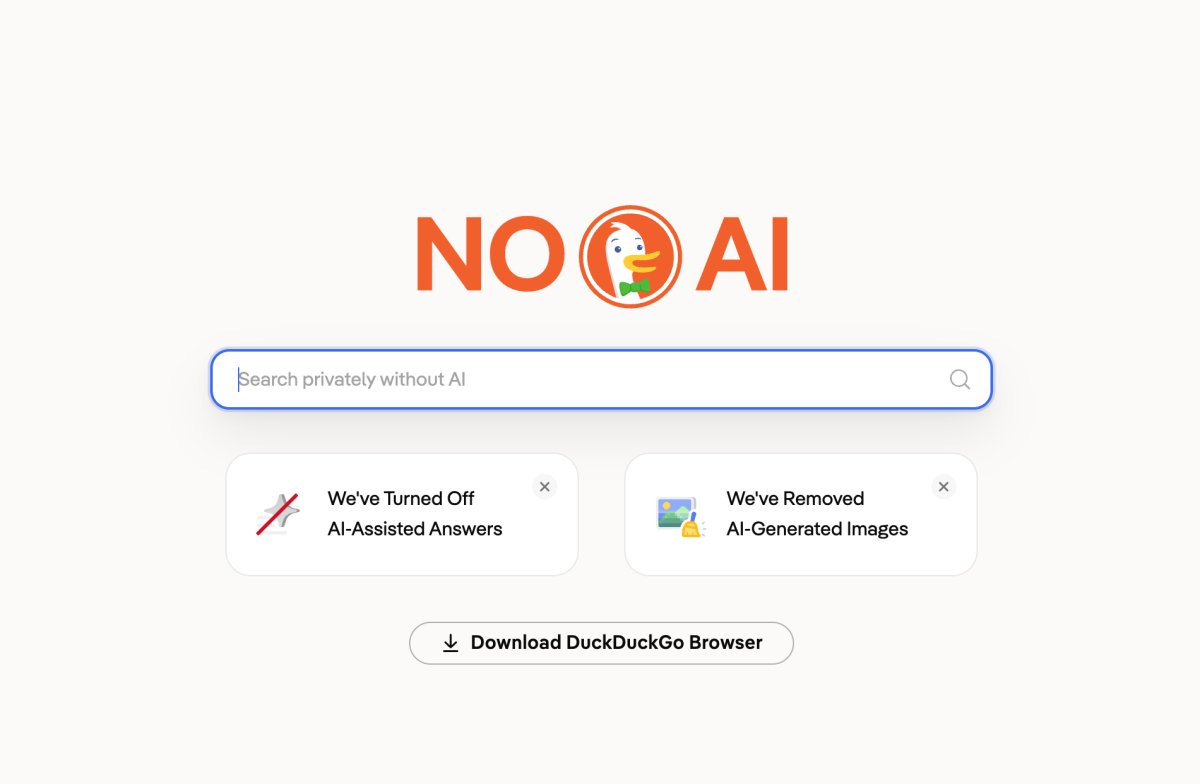
DuckDuckGo installs surged 30% in a single week after Google replaced traditional search with AI agents at I/O. Traffic to its “No AI” search page tripled. 93% of respondents in a DuckDuckGo poll said they actively reject AI search features. (TechCrunch)
Anthropic closed a $65 billion round at a $965 billion valuation, passing OpenAI to become the most valuable AI startup. Revenue run rate hit $47 billion, nearly tripling since February. Claude Code is the growth engine. (CNBC)
47% of B2B SaaS companies have already cut or reduced marketing roles because of AI, mostly by quietly not backfilling open positions. Content and copywriting ranked as the most at-risk function at 60%. (MarTech)
New York’s AI disclosure law takes effect June 9, requiring conspicuous disclosure of AI-generated “synthetic performers” in ads. $1,000 fine for a first violation, $5,000 for each one after. First state law of its kind. (National Law Review)
Google expanded Preferred Sources into AI Overviews and AI Mode. Users have selected 345,000 preferred sources, up from 90,000, and are twice as likely to click a link with the “Preferred” badge. (Search Engine Land)
Meta launched paid subscriptions across Instagram, Facebook, and WhatsApp, plus two AI-focused tiers under a new “Meta One” brand starting at $7.99 a month. Premium unlocks deeper reasoning and image generation. (TechCrunch)
DeepSeek made its 75% V4-Pro price cut permanent, landing at roughly $0.18 per million blended tokens, 11.5x cheaper than GPT-5.5 on input. A discount that does not expire is a market floor. (Engadget)
🗞️ top ai + marketing news
the ai-free revolt
DuckDuckGo installs surge 30% as users reject Google’s AI search
TechCrunch | ~4-min read
After Google replaced traditional search with AI agents as the primary interface at I/O, DuckDuckGo saw U.S. app installs jump 18.1% week-over-week on average, peaking at 30.5%. iOS installs peaked at 69.9%. Traffic to its AI-free search page, noai.duckduckgo.com, tripled. A DuckDuckGo poll of 110,000 respondents found 93% actively rejecting AI search features.
Why it matters: People are not rejecting AI because they never want help. They are rejecting the feeling that search has become something done to them rather than something they control. That distinction matters for every marketer building an AI-forward experience right now.
Marketers trust AI to buy media, not build brands
Digiday | ~5-min read
Marketers are comfortable letting AI handle programmatic buying, bidding, and backend content operations. They draw the line at brand voice, consumer-facing creative, and core strategy. Ally Bank’s CMO says the efficiency case is clear but younger consumers “regale against anything created by AI.” Mondelez says it will not hand over consumer insight development to AI. 78% of shoppers still prefer ads made by people.
Why it matters: The gap is not about whether to use AI but instead about where. The brands getting this right are using AI for speed behind the curtain and keeping human judgment on everything the customer actually sees.
anthropic’s trillion-dollar moment
Anthropic nears $1 trillion valuation, eclipses OpenAI
CNBC | ~6-min read
Anthropic closed a $65 billion Series H at a $965 billion valuation, led by Altimeter, Dragoneer, Greenoaks, and Sequoia. That nearly triples its $380 billion valuation from February and puts it above OpenAI for the first time. Revenue run rate is $47 billion, up from $30 billion earlier this year and $10 billion last year. Claude Code is driving much of the growth.
Why it matters: The company that bet on safety and developer tooling just became the most valuable AI startup on earth. For marketers watching which platform to build on, the enterprise money has spoken.
the marketing jobs squeeze
AI is powering the loss of B2B marketing jobs
MarTech | ~6-min read
A Wynter report found 47% of B2B SaaS companies have already cut or reduced marketing roles because of AI. Most cuts never showed up as layoffs. Companies quietly stopped backfilling open jobs and let attrition shrink teams. Content and copywriting ranked as the most at-risk function at 60%, followed by design at 37%. One respondent noted that experienced marketers can now produce junior-level work “in just a few hours with Claude.”
Why it matters: The jobs are not disappearing in a headline but are disappearing in a backfill that never gets approved. If you are early in your marketing career, the entry ramp is narrowing in real time, and nobody is sending a memo about it.
openai’s ad ambitions vs. reality
OpenAI’s ad business is still a work in progress
Digiday | ~6-min read
OpenAI is targeting $2 billion in ad revenue by end of 2026 and $102 billion by 2030. Public sentiment toward ChatGPT ads flipped positive during the pilot, swinging from -17.9% to +49.3%. But daily time spent per active user fell 18.3% between March and May, and power users dropped 14.5%. Enders Analysis projects ChatGPT will need to grow revenue per query from $0.002 to $0.041 by 2030 to hit its targets.
Why it matters: The ambition is Google-scale, but the infrastructure is pilot-stage. For marketers considering ChatGPT ads, the audience is there but shrinking per session, and the measurement tools are still catching up. Worth testing, not worth betting a quarter on yet.
new york draws the line
New York’s AI disclosure law takes effect June 9
National Law Review | ~5-min read
Starting June 9, any advertiser distributing content in New York must conspicuously disclose the use of AI-generated “synthetic performers,” digitally created people who look real but are not identifiable as any actual person. First violation is a $1,000 fine, $5,000 for each subsequent violation. Exemptions exist for expressive works like movies and games, and for audio-only ads.
Why it matters: This is the first state law requiring AI disclosure in advertising. The fines are small, but the precedent is not. If your brand uses AI-generated people in any ad that runs in New York, you need a disclosure plan by next Monday.
the new search signals
Google expands Preferred Sources into AI search
Search Engine Land | ~5-min read
Google brought its Preferred Sources feature into AI Overviews and AI Mode on May 27. Users have now selected over 345,000 sources, up from 90,000 when the feature went global. Links from preferred sources carry a visible badge inside AI-generated responses, and users are twice as likely to click through when that badge appears. Google also added a “Highly Cited” badge to web articles referenced by other publications.
Why it matters: Google just gave users a way to tell AI search which brands they trust. If your site earns that badge, you get preferential placement inside the AI answer. This is the closest thing to organic loyalty that AI search has produced so far.
meta’s subscription bet
Meta launches paid subscriptions for Instagram, Facebook, and WhatsApp
TechCrunch | ~5-min read
Meta rolled out Instagram Plus, Facebook Plus, and WhatsApp Plus at $2.99 to $3.99 a month, along with two AI-focused Meta One tiers: Plus at $7.99 and Premium at $19.99. The premium tier unlocks deeper reasoning, more image and video generation, and enhanced analytics. Professional plans up to $49.99 are testing in select markets. The move diversifies Meta’s revenue beyond advertising for the first time at scale.
Why it matters: Meta just created a two-tier user base. Paid subscribers get better AI tools and deeper analytics. Free users get the standard feed. For brands, the question is whether paid users engage differently and whether Meta starts gating features that marketers currently get for free.
the ai price war
DeepSeek makes its 75% price cut permanent
Engadget | ~4-min read
DeepSeek made its V4-Pro discount permanent on May 22, landing at roughly $0.18 per million blended tokens, 11.5x cheaper than GPT-5.5 on input and 34.5x cheaper on output. The move sets a market floor that every Chinese frontier lab will need to match and puts cost pressure on OpenAI, Anthropic, and Google.
Why it matters: For marketing teams building AI into their workflows, the cost of running these tools is about to drop faster than most budgets anticipated.
👩💻 thought-leader highlights
Ariel Cohen - “An Anthropic engineer just told you to stop building agents”
Ariel breaks down a 14-minute talk by Barry Zhang from Anthropic’s Applied AI team, and the core message is blunt: if you can map the decision tree, build a workflow, not an agent. Agents are for ambiguous, high-value tasks only. Most builders don’t have an agent problem. They have a workflow problem dressed up as an agent. The teams shipping working AI in 2026 are the ones who picked the boring option and shipped twice as fast.
Dr Lauren Ingram - “24 talks from Claude Code London, and most of them apply to any coding agent”
Lauren highlights the full recording drop from Anthropic’s Claude Code London event, calling out five talks worth starting with: Beyond the Basics, The Prompting Playbook, Using Lovable to Vibecode at Scale, Claude Design from Prompt to Production, and Stop Babysitting Your Agents. The content applies across coding agents, not just Claude, making it relevant for anyone building with AI tools right now.
Hamna Aslam Kahn - “Most people never unlock what Claude can actually do”
Hamna outlines 11 advanced strategies including using Projects for persistent context, creating identity files with role and tone preferences, enabling Extended Thinking for complex problems, and asking Claude to write its own optimal prompts. The throughline is treating Claude as a thinking partner with established context rather than a search engine you query from scratch each time.
Michelle Blaser - “The line between B2B and B2C marketing is gone”
Michelle writes that 79% of B2B companies now sell directly to consumers, up from 66% in 2024, and search interest in “B2B2C” has tripled in five years. The shift is driven by new revenue streams, Millennial and Gen Z decision-makers who reject boring marketing, and brand strength becoming a competitive moat as AI commoditizes the work itself. Contributors from Slack, Pinterest, and Air weigh in on how they straddle both sides.
Karina Taveras - “I built a social media performance coach that runs itself”
Karina programmed Claude Cowork to run automated weekly audits every Monday at 7 AM across LinkedIn, Instagram, TikTok, and YouTube, compiling performance data into an HTML report with graphs and callouts. Her results surfaced patterns she would have missed manually: TikTok grew 212% week-over-week with 13.8% of views from search discovery, and batch-posting eight LinkedIn posts at once killed reach. She recommends repurposing newsletter content into Reddit threads to influence AI training data while building human authority.
🛠️ latest ai + marketing tools
Claude Opus 4.8 + Dynamic Workflows
Anthropic released its latest flagship model on May 28, just 41 days after Opus 4.7.
Opus 4.8 brings improvements in coding, reasoning, and knowledge work, with a new Dynamic Workflows feature that lets the model coordinate hundreds of parallel subagents for complex tasks. Fast mode runs at 2.5x speed and is now three times cheaper. Available on Enterprise, Team, and Max plans.
ChatGPT Super App
OpenAI combined chat, coding, search, and agent capabilities into a single unified experience. The redesign consolidates what used to be separate tools into one interface, making it easier for marketers to move between research, content creation, and task execution without switching modes. Available across all plans.
OpenAI ChatGPT Expanded Ad Formats
OpenAI is testing larger images, customizable call-to-action buttons, and dedicated e-commerce layouts inside ChatGPT ads. New formats include pricing displays and customer reviews directly in the ad unit, plus upgraded audience targeting, conversion tracking, and outcome-based optimization. Building toward its $2.5 billion ad revenue target for the year.
AdRoll MCP Server
AdRoll launched an open beta MCP server connecting campaign data to ChatGPT and Claude. Marketers can use natural language to pull performance reports, analyze trends, compare time periods, and start campaign creation workflows, all from inside their AI assistant. Draft-first controls keep humans in review before changes go live.
Attentive Agentic AI
Attentive unveiled agentic AI features at its Thread 2026 event for SMS and email marketing. The system reviews customer engagement signals across channels to evaluate intent, then generates campaign recommendations and manages message creation automatically. Designed for marketing teams running lifecycle and retention programs at scale.
INCRMNTAL AURORA
INCRMNTAL launched AURORA in beta, a conversational analyst built on causal incrementality data. Ask natural language questions about where to scale, where to cut, and what is actually driving growth. Unlike typical AI assistants, AURORA considers marginal results and diminishing returns before making a recommendation. In beta for select clients now.
Pattern Intelligence (Pi)
Pattern launched an AI execution engine for e-commerce brands selling across Amazon, Walmart, TikTok Shop, and other marketplaces. Built on 77 trillion proprietary data points, Pi monitors pricing, advertising, and inventory through active sensors, triggering automated adjustments in real time. New features include Chat-to-Data for on-demand queries and scorecards tracking how products rank with AI shopping agents like Alexa, Sparky, and ChatGPT.
Snapchat AI Sponsored Snaps
Snap launched AI-powered brand agents that live directly inside the Chat tab.
Users can interact with brand AI agents for recommendations, pricing, and product details without leaving a conversation. First alpha partner is Experian. Sponsored Snaps already deliver 22% more conversions and nearly 20% lower cost per action compared to other Snap ad inventory.
DuckDuckGo AI-Free Browser Extensions
DuckDuckGo released new browser extensions that set its no-AI search as the default.
No AI-assisted answers, no chat prompts, fewer AI images in results. A direct response to Google’s all-AI search redesign at I/O. Installs surged 30% in the week following the announcement.
Madhive Maverick AI Agents
Madhive launched agentic AI for local video advertising and media planning. Maverick monitors inventory and coordinates target audiences at national scale, designed for the local TV and streaming ad market. Integrates directly into Madhive’s existing programmatic platform.
Klarna ChatGPT Shopping
Klarna built a shopping engine inside ChatGPT, wired to 100 million products across 13 markets. Shoppers can discover and compare products through conversation, then check out through Klarna. Positions AI chat as a full-funnel commerce channel rather than just a discovery tool.
Acclaro Multimedia Orchestration
Acclaro launched real-time subtitle translation across 100+ languages with AI-powered audio dubbing and voice cloning. Built for global content distribution at scale. Relevant for any marketing team localizing video campaigns across markets without reshooting.
💼 cool ai + marketing jobs
Plaid - AI Marketing Technologist Lead
eBay - Product Marketing, AI Solutions
Replit - Product Lead, Growth Marketing
Google - Program Management Lead, AI and Gemini App Marketing
Adobe - Director, Creative Strategy & AI Innovation
Reply anytime and let me know:
Topics you’d like covered in future weeks
Sections you love or could do without
Questions about AI, marketing, or anything else
Love y’all,
Carley
So cool! AI adoption matters and the winners will be the ones using AI to improve experiences, not replace human trust.
We gotta find a way to collab! We’re all about helping brands be human-centered in the age of AI!