

~The AI + Marketing Weekly~
what you need to know this week in ai + marketing (15-second version):
Ex-Mailchimp CMO argues most marketing orgs are stuck in sequential, siloed setups built for a pre-AI world - the fix is a “brand code,” a machine-readable knowledge base both humans and agents can act on. (Harvard Business Review)
OpenAI launched a $4B consulting arm backed by TPG, Bain Capital, Goldman Sachs, and McKinsey - embeds AI engineers directly inside enterprises. Acquired AI firm Tomoro on day one for 150 deployment specialists. Anthropic launched a nearly identical venture with Blackstone the same day. The AI race is now about implementation, not just models. (OpenAI)
Gartner expects traditional search volume to drop 25% by 2026 as chatbots and agents capture share - 83% of marketers say AI frees time for higher-value creative work. Brand voice and originality become more valuable, not less. (EY)
88% of organizations use AI in at least one function, but execution is fragmented - most platforms rushed to add isolated AI buttons that don’t carry context from one step to the next. Buying another tool is easy; mapping how your team actually works is hard. (CMSWire)
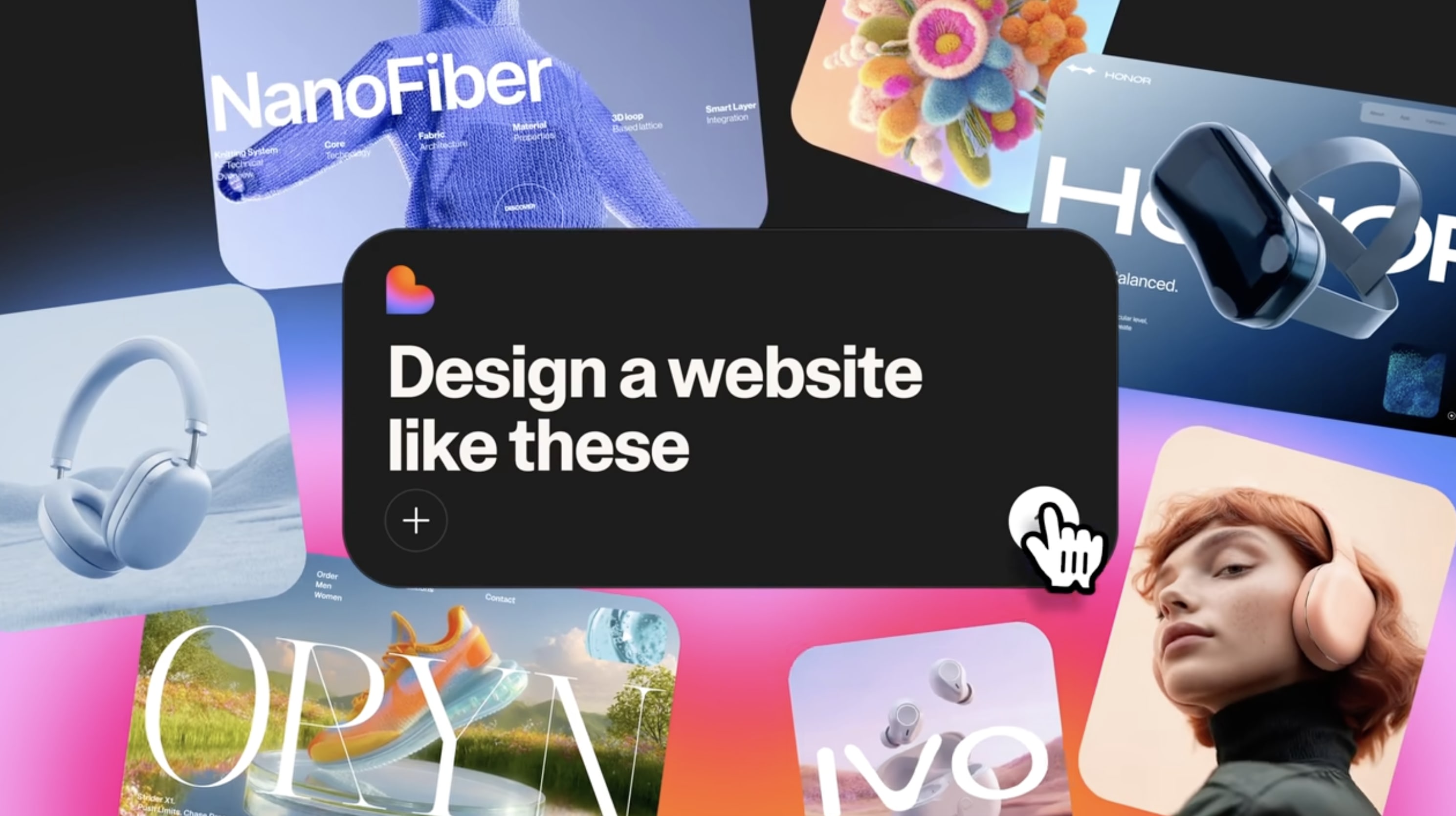
Lovable's latest update brings real design intentionality to vibe coding - now asks for typography, layout, and color preferences before writing a single line. Preview design concepts first, then build. (Lovable)
🗞️ top ai + marketing news
ai is starting to build itself
AI systems are about to start building themselves
Import AI | ~12-min read
Jack Clark, Anthropic co-founder, says there’s a 60%+ chance fully autonomous AI R&D arrives by end of 2028. The proof point: Claude Opus 4.7 implemented an AlphaZero-style self-play pipeline from scratch on consumer hardware in three hours, beating the Pascal Pons Connect Four solver in 7 of 8 runs with no starter code.
My take: This piece has been quietly making the rounds for a reason. The takeaway for marketers is not panic, it is build the muscle now, because the gap between people who know how to direct AI and people who don’t is about to get a lot wider.
the agentic org chart
Redesigning your marketing organization for the agentic age
Harvard Business Review | ~9-min read
Ex-Mailchimp CMO Michelle Taite and co-authors argue most marketing orgs are stuck in sequential, siloed setups built for a pre-AI world. The fix is a “brand code,” a machine-readable knowledge base both humans and agents can act on, with specialized agents handling content, experimentation, distribution, and reporting while marketers move into strategic direction.
My take: Will the term “brand code” be everywhere within six months? Let’s see!
An operating model for the age of AI
Bain | ~11-min read
Bain says AI is not a tech upgrade, it rewires how the enterprise creates value. Microsoft already tracks more than 500,000 AI agents doing real work. The org chart becomes an accountability chart, where humans decide which agents run, what they access, and when to step in.
My take: Accountability chart is a useful frame. The people who get it are the ones who can name exactly which decisions only they should make and which ones an agent can run.
How AI is reshaping the future of marketing
EY | ~8-min read
Gartner expects traditional search volume to drop 25% by 2026 as chatbots and agents capture share. EY says marketing is shifting from campaign cycles to an always-on operating model, with 83% of marketers saying AI frees time for higher-value creative work and 75% calling it a clear differentiator. Brand voice and originality become more valuable, not less.
My take: Worth bookmarking the “brand voice becomes more valuable, not less” line for the next time finance asks why you still need senior writers on the team. :-)
what ceos want vs. what cmos can do
Marketers strain to juggle media, AI, and CEO expectations
Digiday | ~6-min read
Gartner’s CMO Spend Survey shows marketing budgets sitting flat at 7.8% of revenue, with 15.3% of that going to AI on average. 80% of CEOs expect AI to drive significant change, but 56% of CMOs say their budgets aren’t enough to hit their goals, and 56% say budgets will be cut if they miss. Dept’s Mammut campaign is a useful tell: 15% on paper, but AI shapes most major decisions.
My take: AI is influencing close to everything we touch, but the budget line still looks like a tidy little slice.
creator marketing and demand gen rewiring
AI is rewiring creator marketing, and most brands aren’t keeping up
Edelman | ~5-min read
Edelman argues too many teams are experimenting at the edges instead of integrating AI into the core of how creator marketing drives revenue. Creator discovery now runs on systems that analyze audience quality, content patterns, and brand alignment in seconds. If your process still looks the same as it did two years ago, you’re making weaker decisions with less information.
My take: Creator marketing is one of those areas where the old workflow looks fine until you sit next to someone using AI properly and realize they’re vetting twenty creators in the time you’re vetting two.
Rewiring demand generation in the age of AI agents
Bain | ~10-min read
CPG brands now have to sell to consumers and bots. As shoppers shift to mission-based prompts like “plan my son’s birthday,” agents collapse the funnel and favor distinctive, concrete, review-backed attributes over broad brand equity. Bain says innovation has to move toward step-change features and personalized variations because novelty has to justify the algorithm relearning your product.
My take: This piece is mostly about CPG but applies to anyone whose customers are starting to ask a chatbot before they ask anyone else. Your brand still matters, but it matters in a new way: structured, specific, and easy for a machine to repeat back.
workflow, localization, and the practical mess
Why your marketing team’s AI problem is actually a workflow problem
CMSWire | ~7-min read
88% of organizations now use AI in at least one function per McKinsey, but execution is fragmented. Most platforms have rushed to add isolated AI buttons that don’t carry context from one step to the next. Work management platforms like Asana, Monday.com, and Workfront are becoming the operational glass where humans and agents collaborate.
My take: This is the under-discussed part of agentic AI. Buying another tool is easy, mapping how your team actually works is hard, and the second one is where the real value lives.
AI is exposing marketing’s localization gap
The Drum | ~4-min read
Bernie Bingham of Spark argues AI handles content volume fine but widens the gap between global ambition and local delivery. With 75% of marketers now using AI tools, speed is the expectation, not the advantage. AI can’t fix poor processes, it just adds pressure, and human judgment is still required for cultural fit.
My take: Anyone who has watched a perfectly good campaign land badly in a market it wasn’t designed for already knows this in their bones. Speed is not the same thing as good.
the state of ai marketing in numbers
34 AI in marketing statistics
Shopify | ~10-min read
88% of marketers report regularly using AI for at least one function, but only 32% have fully integrated it across workflows. 77% of GenAI adopters use it primarily for creative development. 59% of CMOs say their 2025 budgets are insufficient. Display ad budgets are projected to drop 30% by 2026 as consumers shift to AI chat interfaces. Only 31% of individual contributors believe their leaders actually understand the AI they’re promoting.
My take: Leadership pushing AI hard while teams quietly suspect the top doesn’t get it is how trust breaks down.
AI in marketing examples you can use today
Sprout Social | ~9-min read
Sprout’s roundup walks through real applications: Salesforce Einstein for churn prediction, Agentforce integrated with Sprout for faster case resolution, Google Ads using behavioral data to predict ad performance, and AI-assisted copywriting for social. The use cases cluster around segmentation, customer care, content creation, predictive analytics, and reporting.
My take: If you want a practical menu to bring into a planning meeting, this is one of the better ones I’ve seen.
google’s measurement push
Turn your data into decisions
Google | ~5-min read
Ahead of Google Marketing Live 2026, Google announced three measurement updates: a Data Manager map view for visualizing how data flows between platforms, Meridian GeoX for causal geo experiments, and Meridian Studio, an enterprise MMM platform on Google Cloud. Advertisers using the Google tag gateway see an average 14% conversion lift.
My take: The MMM revival is real and Google wants to own it.
design, tools, and the human signal
Canva’s Cameron Adams on why the company is doubling down on AI
Inc. | ~7-min read
Canva’s co-founder and chief product officer tells Inc. the company is moving from “a design platform with AI tools” to “an AI platform with design tools.” The latest update adds AI agents that coordinate across Canva’s products, integrations with Slack, Zoom, Gmail, Google Drive and Calendar, scheduled tasks like email summaries, print-on-demand, and offline editing.
My take: Canva keeps quietly turning into the operating system for small business marketing. The Flodesk and Paypal integrations especially are the kind of move that makes a non-technical founder’s day shorter.
Why AI brands are obsessed with serif fonts
Creative Bloq | ~4-min read
Serif fonts are back, and the shift is being driven by AI brands wanting to feel more human, more analogue, more crafted. Anthropic’s Claude uses serifs across its UI and ads. Designers interviewed say the overly polished hyper-uniform AI aesthetic created visual fatigue, and brands are reaching back for warmth and character.
My take: When the tech is the thing people are most nervous about, the typography has to do extra work to feel safe.
👩💻 thought-leader highlights
Allie K. Miller - “I have more named AI agents than I have employees inside my company”
Miller writes that an AI agent infrastructure with a chief of staff agent named Simon, 6 directors, 20+ subagents, and unlimited spawned civilian agents. In under 11 minutes, the agent crew completed 11 parallel tasks across calendars, Slack, email, and recordings. The post emphasizes AI’s evolution from a basic tool into an operational layer for workflow coordination, driven by a goals-context-decisions flywheel.
Maks Lepokhin - “AI won’t replace you. People with taste will.”
Lepokhin writes that AI-generated designs have become homogeneous and standing out requires genuine design knowledge and cultivated aesthetic judgment. He emphasizes that design accessibility through AI tools doesn’t guarantee quality, you cannot prompt your way to a perfect graphic. Building visual literacy demands intentional study through resources like Cosmos, physical magazines (Apartamento, Kinfolk), and curated platforms like Godly.website.
Rachel Roundy - “Ladies – we need to talk about AI”
Roundy addresses divisive reactions women are expressing toward AI, particularly following Reese Witherspoon’s AI involvement. She advocates for curiosity over dismissal, arguing that women should engage thoughtfully with the technology to shape its future rather than attacking others exploring AI. She rejects performative moral superiority and positions herself as someone working in enterprise AI who remains critical of thoughtless deployment while appreciating the field’s potential.
Ruben Hassid - “Setup Claude Cowork for Efficient Writing Sessions”
Hassid provides a step-by-step guide for configuring Claude Cowork to optimize writing workflows. The setup involves creating a folder structure with “About Me,” “Outputs,” and “Templates” sections, building foundational files with personal information and writing style guidelines, and configuring global instructions. The real game-changer is reducing repetitive context-establishment during conversations, preventing Claude from treating you like a stranger in each session. Generated 2,789 reactions and 292 comments.
Lenny Rachitsky - “Notion’s Max Schoening on Product Design and Innovation”
Rachitsky shares seven key insights from Max Schoening, Head of Product at Notion: exceptional products center on one tiny, well-executed element; taste is a virtual machine that predicts audience reactions; AI enables rapid prototyping making the first 10% of every project free; agency and adaptability become the differentiator as AI closes skill gaps; designers should think in code to understand constraints; being first is irrelevant, sustained excellence matters; and software requires maintenance like a garden.
Sophia Amoruso - “Women are sleeping on AI and it’s going to cost them”
Amoruso argues that women lag in AI adoption not due to lack of capability, but because “nobody’s talking to them.” Harvard research shows women adopt AI at 25% lower rates than men, attributed to receiving less manager support and workplace recognition. However, women’s AI adoption tripled last year versus men’s doubled rate. She shares practical examples of using Claude for meeting scheduling and Perplexity for inbox analysis, encouraging readers to start with small, manageable tasks rather than waiting for perfect understanding.
🛠️ latest ai + marketing tools
OpenAI Deployment Company
OpenAI launched a $4B consulting arm backed by TPG, Bain Capital, Goldman Sachs, and McKinsey to embed AI engineers directly inside enterprises. Acquired AI firm Tomoro on day one for 150 deployment specialists. Anthropic launched a nearly identical venture with Blackstone the same day. The AI race is now about implementation, not just models.
Anthropic Finance Agents
Ten ready-to-run Claude agent templates for pitchbook building, KYC screening, earnings analysis, and month-end close, available as plugins in Claude Cowork or Claude Code. Pulls live data from FactSet, Morningstar, PitchBook, and Moody’s. FactSet stock fell 8% on announcement day.
Lovable aesthetics update
Lovable's latest update brings real design intentionality to vibe coding: ask for typography, layout, and color preferences before a single line gets written. Preview design concepts first, then build. Landing pages, apps, and blogs that actually look good out of the box.
GPT-5.5 Instant becomes ChatGPT’s default
OpenAI’s new everyday model for all users claims 52.5% fewer hallucinations on high-stakes prompts, sharper answers, and personalization using your past chats and Gmail. Paid users keep GPT-5.3 Instant access for three more months.
OpenAI Voice Intelligence
Three new API voice models: GPT-Realtime-2 (GPT-5-class reasoning in live voice), GPT-Realtime-Translate (70+ input languages, 13 output languages), and GPT-Realtime-Whisper (live transcription). Zillow reported a 26-point lift in call success rates in early testing.
Claude Managed Agents: memory update
Claude agents can now learn and retain context across sessions without manual re-briefing, stored as auditable files exportable via API. Pairs with the new Finance Agents for production-ready agentic workflows.
Spotify Personal Podcasts S
Spotify launched a beta CLI tool so AI agents can generate private, personalized audio, daily briefings, study guides, travel itineraries, and save them directly to your Spotify library. Works with Claude Code, Codex, and OpenClaw. Positions Spotify as the home for AI-generated personal audio.
ChatGPT Trusted Contact
ChatGPT users can now designate a trusted adult to receive a brief notification if human reviewers detect a serious self-harm concern in their conversations. Optional, consent-based, and private (no chat content shared). Available on personal accounts, not business or enterprise.
Claude for Microsoft 365
Claude now works natively in Excel, PowerPoint, Word, and Outlook, with context carrying automatically between apps. Start an analysis in a spreadsheet and finish in a deck without re-explaining anything.
Grok 4.3
xAI’s latest model with 1M token context, native video input, built-in reasoning, and a ~40% price cut to $1.25/M input tokens. Tops agentic tool-calling benchmarks. Eight legacy Grok models retire May 15.
Perplexity Personal Computer
Perplexity’s always-on Mac AI agent, which works across local files, native apps, and the web, is now available to all Pro and Max subscribers. Runs proactive tasks around the clock with explicit approval required for sensitive actions.
Grok Imagine Quality Mode
xAI launched Quality Mode for its image generation API, improving realism and text rendering. Grok Imagine currently ranks number one on the LMArena text-to-image leaderboard. Also launched this week: standalone Speech-to-Text and Text-to-Speech APIs built on the same stack powering Grok Voice and Tesla vehicles.
ElevenLabs Studio
A full production environment for creating long-form audio including audiobooks, podcasts, and narrated articles, with voice cloning, chapter-level editing, and one-click publishing.
Sierra
Sierra expanded its customer-facing AI agent platform with new personalization, escalation routing, and brand voice consistency tools. Clients include Sonos, Weight Watchers, and Casper.
Box Automate
Box launched AI-powered workflow orchestration for document-heavy processes like contracts, invoices, and compliance reviews. Triggers intelligent routing and classification without coding.
Luma AI API
Luma opened its video generation capabilities to developers via API, supporting text-to-video, image-to-video, and video extension for programmatic video production at scale.
Codex Chrome Extension
OpenAI’s Codex coding agent is now available as a Chrome extension, letting developers understand and debug web pages directly in the browser.
Google + Flow Music
Google partnered with music creation platform Flow to bring Gemini’s AI music generation into professional production workflows.
Microsoft Copilot Cowork in Frontier
Microsoft’s Claude-powered Copilot Cowork is now available inside OpenAI’s enterprise platform Frontier. A cross-vendor moment worth watching.
Unwrap AI
Unwrap launched a product operations AI feature that synthesizes customer feedback across channels into structured product insights, automatically tagging themes, urgency, and sentiment.
💼 cool ai + marketing jobs
Plaud - Global Brand Director - San Francisco
Microsoft - Senior Brand Strategist
Adobe - Senior Product Manager, Brands AI
Sendbird - Product Marketing Manager (AI-First, Full-Stack)
Intuit - Generative Creative Technologist, Marketing Futures
eBay - Product Marketing, AI Solutions
Reply anytime and let me know:
Topics you’d like covered in future weeks
Sections you love or could do without
Questions about AI, marketing, or anything else
Love y’all,
Carley